In short
- CAA-Quebec, citing CMHC, says ice at the roof edge comes mostly from poor attic ventilation and heat loss.
- Water trapped behind the ice can lift under shingles and reach insulation, walls and ceilings.
- Heating cables manage the ice; ventilation and insulation remain the fix, on the same source.
- Insurance Bureau of Canada: most home policies cover sudden water damage from ice dams; repeated damage is usually left out.
- Ottawa averages about 175 cm of snow a year (1981 to 2010 normals) and around 115 days with snow cover.
What an ice dam is
Heat escapes from the house into the attic and warms the roof deck. The lower layer of snow melts and runs down the slope. At the eave the roof is cold, because there is nothing warm beneath it, and the water freezes. A ridge of ice builds, and the next meltwater has nowhere to go. CAA-Quebec, crediting the Canada Mortgage and Housing Corporation, describes exactly this chain, and names poor attic ventilation and weak soffit ventilation as the cause in almost every case.
It affects sloped roofs of any pitch and material. Flat roofs get it too, usually near the drains.
Signs on a house
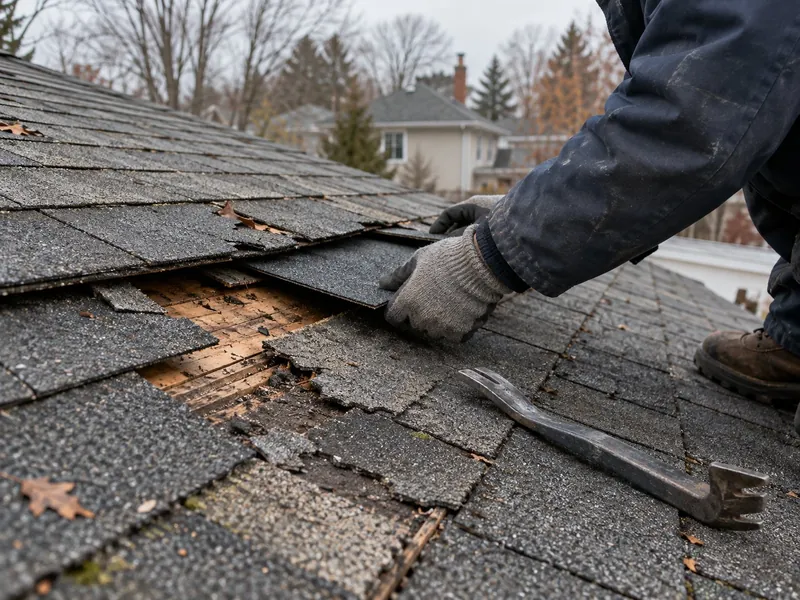
From the street: a thick edge of ice at the eaves, long icicles, snow that has melted in patches on the upper roof while the lower edge stays white. Inside: a stain on the ceiling along an exterior wall, bubbling paint, damp insulation, a drip at a window head, a wet smell in the attic. The stain often appears during a mild day in the middle of winter, when the melt is strongest. The roof leak repair page covers how a company traces water that travels.
What it damages
The CAA-Quebec list: water getting under asphalt shingles, damaged attic insulation, stains on exterior walls and ceilings, sagging or deformed eavestroughs, and a hazard for people below when ice breaks off. On metal roofs, sheets of ice can drop without warning. Wet insulation loses its value, which sends more heat into the attic and feeds the next dam.
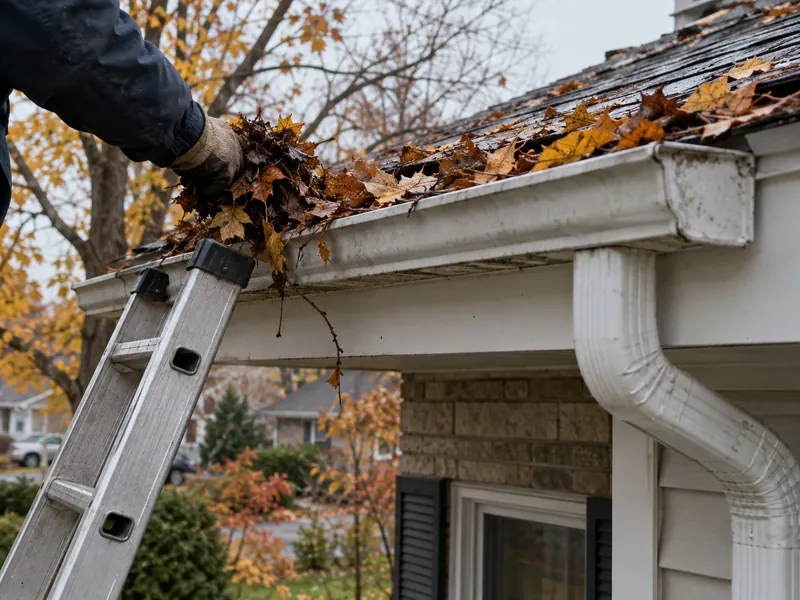
The eavestroughs take a beating. If yours were bent or pulled off in winter, the eavestroughs page covers repair, and soffit and fascia covers the boards behind them, which also supply the air your attic needs.
Where the fix is
The fix is in the attic, in two parts. Ventilation: air enters through clear soffits, passes the insulation through baffles, and leaves through vents high on the roof. Heat control: more insulation on the ceiling and sealed gaps around the hatch, pipes, lights and chimney. A company that only replaces shingles leaves the cause alone. See roof ventilation for the job and its options.
Heating cables are the third tool. CAA-Quebec says they work for managing ice and drainage, and do not replace proper ventilation and insulation. Ask whether the company installs them, who maintains them and what they cost to run. Removing ice is work at height, and the company chooses the method. The same source warns that salt and de-icing products can damage roofing.
Snow, insurance and the claim
Snow management belongs in the plan. The Insurance Bureau of Canada lists insulation, ventilation and snow management as the three factors, plus clean eavestroughs. See snow on the roof for who clears it and why.
On insurance, the Bureau says most standard policies cover sudden and accidental water damage from ice dams, usually not ongoing or repeated damage, and some basic plans leave it out. It advises contacting the insurer as soon as possible, since prompt reporting limits mould and structural damage, and notes insurers may want documentation and a professional assessment. A written roofer’s report with photos serves that purpose.
The Ottawa winter
The numbers explain the problem. Environment Canada normals for 1981 to 2010, as collected by Current Results, give downtown Ottawa about 175 cm of snow a year and snow cover of at least 1 cm for around 115 days. Cold snaps followed by mild days keep the freeze and melt cycle going. Autumn, before the snow, is the time to look. The roof check after winter page covers the spring visit.
What to send, and who answers
The details you send go to one independent Ottawa roofer. That firm books a look at the roof and the attic together, quotes the work, and can put the cause in writing if you ask.
Questions to ask the company
- Did you look in the attic, and what did you find: insulation depth, air leaks, frost on the sheathing?
- Are the soffit vents open, and is there a clear air path from soffit to ridge?
- Is the problem in the roof, or in the heat leaving the ceiling below?
- If I need heating cable as well, what does the installation include and who maintains it?
- Can you give me a written report with photos I can send to my insurer?
Have this ready for the call
- Photos of the ice, the eaves and any icicles, taken from the ground
- Where water shows inside: the room, the wall or the ceiling, with dates
- The age of the roof and the insulation, if you know them
- Access to the attic hatch and the rooms with stains
- Your insurer's name and policy number, in case a claim follows
Questions people ask
Why do ice dams form on some Ottawa houses and not on the neighbour's?
Heat escapes unevenly. A house with thin attic insulation, air leaks around the hatch, pipes or lights, or blocked soffits warms the roof deck, melts the snow from below and refreezes it at the cold eaves. A neighbour with a tighter ceiling keeps the same snow frozen and in place.
Do ice dams damage the shingles?
CAA-Quebec says the harm from an ice dam comes from water it pushes beneath the roofing system. The usual damage is wet insulation, stained ceilings and walls, and bent eavestroughs from the weight of ice. The roof often looks intact from the street.
Are metal roofs safer in an ice dam winter?
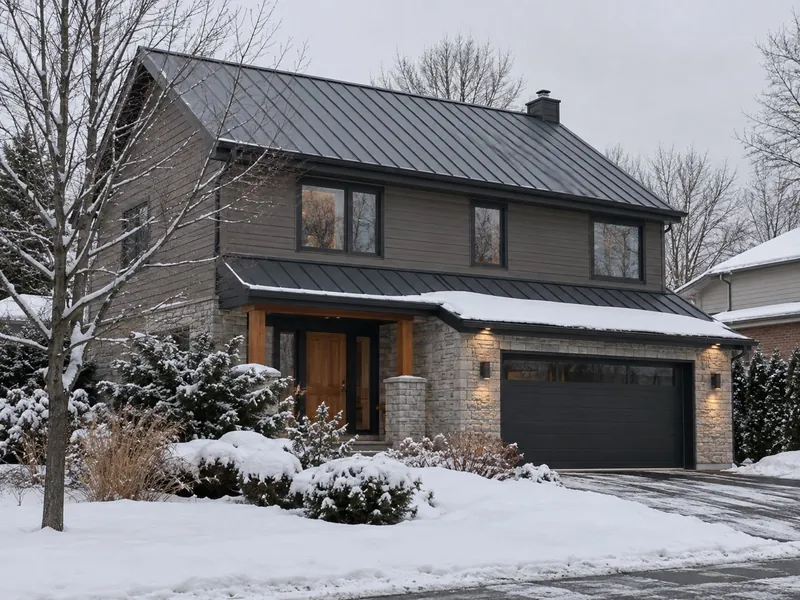
They shed snow faster, which helps, but CAA-Quebec warns that large sheets of ice can slide off a metal roof suddenly and hurt anyone below. The attic cause remains, whatever the roof is made of. Ask the company where the snow lands and whether snow guards are part of the plan.
Will my insurance pay for ice dam damage?
The Insurance Bureau of Canada says most standard homeowner policies cover sudden and accidental water damage from ice dams, and generally not ongoing or repeated damage, which counts as maintenance. Some basic plans exclude it. Call the insurer promptly and keep photos and the roofer’s report.
Why do icicles matter?
Icicles show where meltwater runs over the edge, and large ones point to heat loss or poor drainage above. The bigger risk is the ice that falls: CAA-Quebec lists safety hazards for pedestrians when ice breaks off. Keep people and cars away from the eave until a company has looked.
Can a new roof stop ice dams?
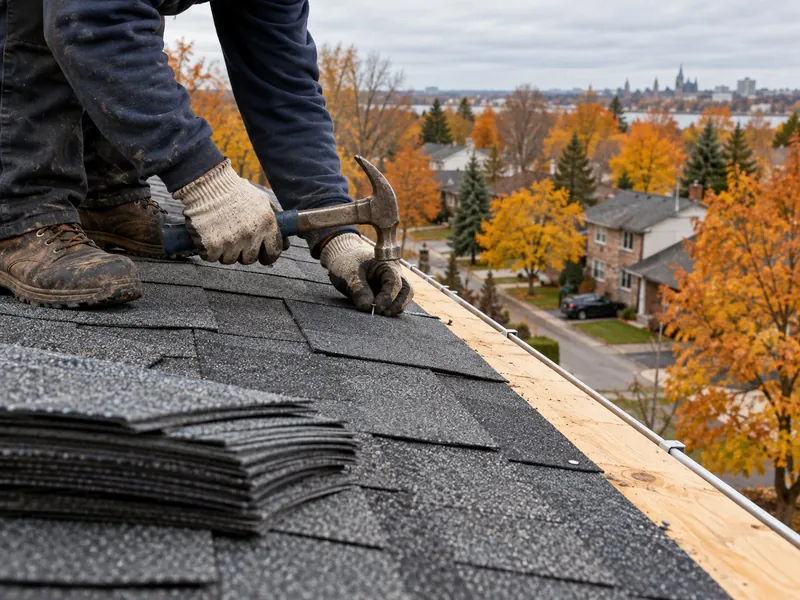
A new roof helps only if the attic is fixed with it. CAA-Quebec says the main cause is attic ventilation and heat loss, and that this affects all sloped roofs, shingle or otherwise. A re-roof is the time to correct soffit vents, ridge vents and baffles.